The Wear and Care of Aligners

I’ve been wearing my Invisalign aligners for several weeks now.  I’ve gotta say that it did take some getting used to.  I mean, I’m wearing these plastic coverings over my teeth. That’s not normal, but over the course of the weeks I’ve been wearing them, it’s become my new normal.

Part of the adjustment period has been finding my rhythm with taking care of them. You’re supposed to wear the aligners for 20-22 hours a day for optimal results, and I want optimal results.  Otherwise, why am I even doing this?

At first, every morning when I got up, I’d take them out and brush them with a toothbrush and then brush my teeth.  I’m not a big breakfast eater, so I didn’t bother eating and then brushing, but a couple of weeks into wearing them, I quickly learned that the best way to deal with them in the morning was to brush the exterior of the aligners while they were still on my teeth.  Before applying toothpaste to my brush, I give them a thorough brushing, then pop them out, run them under cold water, and then brush them on the inside.  Then I go through my usual tooth-brushing routine to the chompers God gave me, pop the aligners back in, and go for the day.  I repeat this process every night before going to bed, too.

It’s the “in-between-regimens” that has taken some getting used to.  You can’t eat with the aligners in, so I’ve had to adjust to the notion of popping some slobber covered aligners out of my mouth in places besides my bathroom at home.  I try to always be at a sink when I take them out so I can run them under some water for a quick rinse.  After the first day in the aligners, I decided it was disgusting for me to take them out, put them in my case un-rinsed, and then pop them back in after eating.  It was just gross to me.  Did you know when spit dries, it dries white?  Yeah.  I know my teeth are a bone-color shade of white, but white, dried-spit spots on my aligners was not cool.  Not cool at all.  A little rinse makes a little difference.  Enough that I try to be near a sink.  That means when I’m at work, I go to one of the oral hygiene stations in the office or to the staff restroom.  That means when I’m at a restaurant, I excuse myself to the restroom after I give the waiter my drink order.   That means when I’m out for a movie with my family, I make that pit stop to the restroom before going into the theater, should I decide I want some popcorn.  Or candy.  Hey, it’s part of the movie-going experience.  Give them a quick rinse, put them in their case, and then into my purse. I also have a travel toothbrush in my purse in case my teeth or the aligners need a quick brushing.

And you know what else is handy?  Those little toothpick/flossers you can buy just about anywhere.
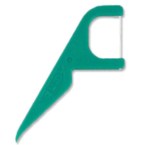
flosser

These things are the bomb for a quick spot clean of the teeth before putting the aligners back in, because honestly, you do not want food in your teeth when you put the aligners back in.  The one thing I didn’t realize before actually wearing aligners myself is that when you wear Invisalign your jaw will adjust to having layers of plastic between them, and when you take the aligners out that means your molars don’t quite meet.  Couple that with the fact that the attachments on my teeth are placed in a strategic way so that my teeth don’t meet in the back in order to affect change in my bite.  Do you know how much grinding those molars together while chewing also helps to remove food from the tops of them.  I never realized just how much this is true until I couldn’t do it anymore.  Its instinctual.  And suddenly I couldn’t do it!  Well, having a little tooth pick or some floss handy to clean my teeth if I’m in a rush is great to have.  And, also, I mean, who wants to find little bits of lunch in their aligners when they take them out for dinner later at home because they didn’t bother to clean their teeth before putting the aligners back in? That’s gross.

Brush your teeth!  Clean those aligners!

Aside from cleaning, the other big part of aligner care is simply not losing them.   We tell patients in the office with regard to retainers and aligners…if they aren’t in your face, they’re in your case.  We have young patients losing retainers all the time, but let me step into the blog confessional and tell you that twice I’ve almost lost my aligners because I put them in a napkin instead of a case.  I know, I know.  Tsk-tsk.  I should totally know better.   #1.  I forgot the case at home and #2.  I decided not to take my purse into my husband’s office Christmas party.  Napkins occurred.  Aligners were almost forgotten.  

Smacking. My. Head.  

Things happen.  I’m getting better.

Every day I’m learning something new.  Stay tuned and see what I learn next.
Delivery Day

One day about 3 weeks after my scan and prescription was sent off to Invisalign, my co-worker, Katie, informed me that my aligners had arrived.  Here’s where I’ve gotta make a confession.  I wasn’t really that anxious to get started.  Don’t get me wrong.  I wanted things fixed.  I wanted to do this.  I am the one that started this process.  It’s just that I wasn’t looking forward to enduring the sensitivity of movement in my teeth or having to wear something over my teeth or worry about taking them out to eat.  It was like the reality of what I was about to do was suddenly sinking in, but having said all that, I was all in with this.  

No matter if I was ready or not, it actually took me a couple more weeks to get to it.  I was sitting at my desk one day when my co-worker, Dee, came up to me and asked, “Invisalign.  You ready?”

I just looked at her for a moment, maybe just processing what she said, but I said, “Absolutely.  Let’s do it.”  She took me to the back, sat me in an exam chair, and we were off!  

The appointment to start Invisalign is about an hour long.  Why?  I mean, there aren’t any brackets or wires, so why is it an hour?

The answer is simple.  While there aren’t any of the brackets and wires involved in braces, there are “bumps” or “attachments” which are tooth-colored that are bonded, or glued, to the teeth that aid in movement of the teeth.  Without them, the Invisalign aligners don’t really have anything to grip on to in order to direct movement effectively.  Putting the attachments on the teeth takes a little time, thus the hour long appointment.

When Dr. Maginnis receives the aligners from Invisalign also included are the attachments.  The teeth have to be prepared and those attachments bonded to the corresponding teeth.  It is a simple enough process but it just takes a little time.  And you get to wear one of those ever-funny cheek retractors that has become a popular game.  Ha!  “Fun with Cheek Retractors!”

Is it just me, or does it always seem like the dentist always wants to chat when you’ve got tools in your mouth, and the orthodontist wants to chat while you’ve got cheek retractors in?  My kids, both teenagers, recently had a weird sort of debate in the middle of our living room about this very topic.  My daughter insisted that a conversation could not be had while sitting in the chair with those things in your mouth, but my son insisted that it could be done, and proceeded to demonstrate.  With his fingers.  It was weird. I’m not sure who won the argument, because I left the room.  Sometimes, folks, you just have to leave the room, especially when teenagers are having ridiculous arguments.

As I was saying, I knew I’d be in the chair for an hour, so I got comfortable and opened up the “notes” app on my phone in case conversation became necessary.

The hour-long estimation is pretty accurate.  It took an hour to prep my teeth, bond the attachments, and show me how to put the aligners in and take them out.

That first day, the aligners felt bizarre.  A little snug, a little “thick,” and a lot of saliva.  It just couldn’t quit.  It’s like my mouth knew something was in there and was trying to wash it away.  Talking was ok, but the “s” sound was a little lispy, but overall, it wasn’t bad.  Not at all!  I found them to be more comfortable than braces ever were, but there would have to be an adjustment period.

My first set of instructions were to remove them when I eat, to wash them with cold water, and when removing them, be sure to remove them from the back first, so pop them off the molars and then pull them down and off the teeth; however, when putting the aligners in, push them onto the front teeth first and then the back teeth.

That’s it, y’all.  One scan.  One hour for “installation.”  Next appointment would be 10 weeks away for an “aligner check.”  Now it was time to settle in, wear the aligners faithfully, and let them go to work.

Scanning My Way Through Step One of Getting Started

Technology can be a wonderful thing, especially in orthodontics.  I remember my trips to the doctor as a kid, and I always hated having impressions done of my teeth.  It requires “goop” that is in a tray they shove into your mouth and have you bite on or they press it against your teeth.  My gag reflex was always activated with this process, so I never cared for it.  Impressions are still used today for a few things, such as retainers, splints, and bite guards, but for appliances and Invisalign, Dr. Maginnis uses the latest in digital technology…the iTero scanner.  

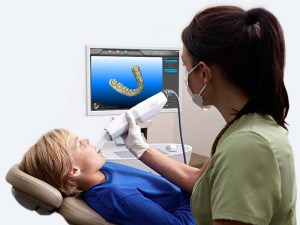
itero
Here we see the iTero scanner being used on a patient

After making the decision to move forward with Invisalign, getting a digital scan of your teeth is the first stop.  It takes about 15-20 minutes.  A clinical assistant uses a scanner that looks like a wand.  You get comfy in the chair, kicked back and as relaxed as you can be while he or she scans the surfaces of your teeth–the front and back, upper and lower, moving all along the surface.  That image is uploaded immediately to the Invisalign program.  One of the coolest features is that you, the patient, can then take a look and see in such detail what your teeth look like, and then you can see a quick simulation of how your teeth will be moved and what the end result is estimated to look like.

Because I work for Dr. Maginnis, I had the opportunity months before actually doing Invisalign to have a scan of my teeth done as part of a demonstration for a health fair we attended.  I must tell you, I was just shocked at what my teeth actually looked like.  There’s really only so much you can see in the mirror, no matter how much you stare into it while brushing your teeth or putting on your makeup.  Sure, they’re your teeth and you notice some nuances and such, but to see them without lips and cheeks in the way, you can see more detail, including the alignment of your bite.  I went from thinking I had one tooth that had moved out of place to seeing that it was several, and that while my bite was on target on the left side, that was not the case on the right side, which also happens to be the side of my jaw with the more extensive TMJ issues.

Being scanned is easy.  It’s not uncomfortable and not hard on the gag reflex, and like I said, it doesn’t take very long to complete.  After my consultation with Dr. Maginnis, he reviewed my scan and discussed with me what changes he’d like to make, which teeth would be moved, and how long treatment would take.  Treatment times are approximations.  In order to stay on the proposed timeline, it’s so important to remember to keep your appointments with the orthodontist, and wear the aligners as prescribed.  However, sometimes teeth can be stubborn or quicker than expected which can alter the treatment time.  My prescribed time was roughly a year.  Included in that time frame was the possibility of another scan.  Those are referred to as refinements.  These are simply an opportunity to check your progress and make any changes in treatment, if necessary.  

Once the consultation was concluded, Dr. Maginnis took my scan and worked up a prescription for Invisalign.  Invisalign received the prescription and fabricated the aligners,  and for me that’s 33 weeks of aligners.  All that’s left is to get the aligners back from Invisalign and get started!

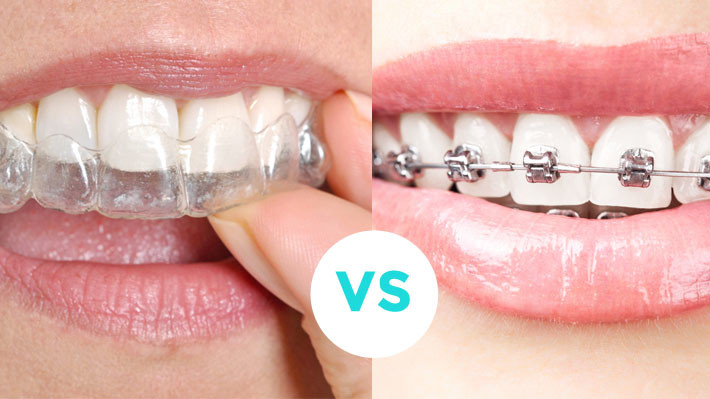
The Pros & Cons: Why Invisalign?

I knew I needed to fix things. I needed to straighten my teeth, improve my bite, and in the process help alleviate the discomfort from my TMJ.   I knew that after three years of braces as a kid, I didn’t want to do braces again, but to be honest, I would have if necessary.  But was it necessary?  Why would I choose Invisalign over traditional braces?

There are pros and cons to each method of moving teeth.  

Pros for braces:

  • They are on and the orthodontist is in control of the movement
  • There are no clear aligners to worry about losing; it’s why braces are often a great option for kids and some teenagers
  • Braces are always at work, since they aren’t removable by the patient

Cons for braces:

  • Braces require more frequent visits to the orthodontist, sometimes every 4 or 6 weeks, for adjustments
  • Brackets can break and wires can poke out as teeth move around the wire, causing discomfort and the need for repairs
  • Certain foods can damage braces, so you have to avoid crunchy, sticky, gooey, and hard foods and candies.
  • Proper hygiene is always crucial, but you must learn to brush and floss around brackets

invisalign-vs-traditional-braces

Pros for Invisalign:

  • Less visits to the orthodontist–Invisalign only requires a checkup every 10 weeks to make sure everything is on track
  • Tooth movement can be very specific–If Dr. Maginnis only wants tooth #10 and #12 that’s all that will move, leaving teeth already perfectly positioned alone
  • Aligners are removable, not limiting the types of foods you can eat and makes special flossing and brushing techniques not necessary, just take them out to eat and brush
  • There is rarely a need for repairs

Cons for Invisalign:

  • You, the patient, are responsible for tooth movement which can also be a pro, but aligners must be worn, without fail, for 20-22 hours per day. What makes this a con for me is that there’s the temptation to remove them if my teeth feel sensitive from moving
  • Removable aligners comes with the possibility of losing them
  • The aligners are not water tight; drinking fluids of any color, especially wine, coffee, and soda come with the possibility of staining the aligners

For me, Invisalign was winning the race on pros and cons, but there was one little tidbit that was a deciding factor.  While I had a cross-bite as a child, my bite is now an overbite.  In order to correct that with braces, my bite would have to be propped open using “bite turbos,” which are “ramps” placed behind the upper front teeth.  Without them, I’d run the risk of my upper teeth bumping against the lower brackets and “biting them off”  every time I closed my mouth.  It’s so much easier for kids to get used to appliances like this, but for the 40 year old woman with longer held habits, that would have been really difficult to contend with.  Invisalign was going to make those little pieces of joy unnecessary.  

After taking all these points into consideration,  it was a no-brainer for me. Invisalign it is! Sign me up!

Deciding to Start is the Hardest Part

Recently I made the decision to undergo orthodontic treatment, but in order to tell you how and why I arrived at this decision I should start at the beginning.

I remember when I was a kid, my mom decided to get braces to straighten her teeth.  She grew up in a single parent home with four siblings, and things like orthodontics were not on the radar, but it was something she had always wanted to do for herself.  She was in her 30’s, and she wore them for a couple of years, but when she was finished, as her oldest child, it was my turn.  

I had exceptionally crowded teeth and a cross-bite.  You can see it in all my pictures from the earlier years of my childhood.  That crooked smile.  As for the crowding, well, that’s an understatement.  I simply didn’t have room for all the teeth God gave me.  My mother said it’s a bit of a curse that her children inherited her large teeth and my father’s small mouth, but there ya’ go.  Genetics.  What can you do?

My first consultation with the orthodontist was sometime during 5th grade, I believe.  I was a little slow to lose my baby teeth, and since my mom was finished with her treatment, she decided I needed a little help.  

Over the course of the next several years, I had multiple teeth extracted by our family dentist, who was of the old school of dentistry, where an extraction meant just a shot or two of Novocaine and some pliers that I was sure he pulled out of his tool chest.  I wore an upper expander to widen the upper palate and arch as part of the process of correcting my cross-bite, I wore a removable lower expander to widen my lower arch, braces, elastics (rubber bands), and of course, retainers.  I was a bit of an oral mess, but I had really nice, straight teeth when it was over.  There were a couple of problems, though.  I couldn’t seem to keep the bonded (glued in) lower retainer in, and I also developed jaw issues, specifically TMD, sometimes referred to as TMJ.  

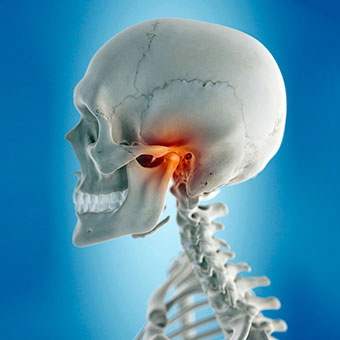
TMJ
Temporomandibular Joint

TMD is Temporomandibular Joint Disorder. This joint is the hinge that connects your jaw to the temporal bones of your skull, located in front of each ear.  It’s this joint that allows you to open and close your mouth, chew, yawn, and yell at your kids for yelling in the house.  There’s so much about this disorder that is a bit of a mystery, but what is known is that the muscles and the bones cause issues that might have arisen due to an accident, grinding or clenching teeth, arthritis, stress, and even genetics.  It is more common in females than males, and often presents around 14 or 15.  I meet at least three of those potential causes:  I had an ATV accident when I was 10, hitting a tree and stopping it with my face.  My sister also has this disorder, so there’s a manifested genetic component, and I’ve often joked that I wear my stress in my face.  I’ve ground my teeth since I started teething.  It’s all led to a life of jaw pain, popping, clicking, and locking of the joint, muscle spasms in my face and neck, and a wearing down of my teeth.  

Over the years, I’ve grown up, married, and had kids, and as time has gone, my teeth have shifted.  See, I knew the orthodontist wanted me to have a “permanent” retainer forever, but it never dawned on me why.  What I didn’t really comprehend was that teeth are always shifting.  You may have had great teeth in your youth or as a young adult, but before you know it, you’re 40 and you notice that your teeth are crowding.  I don’t think grinding my teeth helped matters.  If I had to guess, I’d say that it made matters worse.  It certainly affected my bite.

In recent years, I’ve used bite guards, wearing them at night when I sleep, and I’ve had and used two different TMJ splints. They provide relief while I sleep, but that is always quite temporary.  

In November 2015 I went back to work after being a stay-at-home mom for years.  I went to work for my kids’ orthodontist.  My daughter was already out of her braces and into retainers, and my son was in braces at the time.  I found Dr. Jim Maginnis through the recommendation of friends of mine through our “military wife” network, as we jokingly call it.  While I do marketing for Dr. Maginnis, I also function as a part-time treatment coordinator.  

You learn a lot about teeth and orthodontics while observing these consultations.  Each patient is different and requires specialized treatment.  One might have some mild crowding, and a year in braces will do the trick, while some have more complex issues requiring a longer amount of time in orthodontic treatment.  Some have bite issues, like an overbite or under-bite, or like me, a cross-bite. Some are a combination of things.  Regardless of the case, each one lends a little more knowledge to learning about this specialized field of dentistry.  And what I learned was that I should do something a little more than a splint can provide.

I needed to straighten my teeth and adjust my bite.  This realignment of teeth would help provide some relief, as well as restore a confident smile, but at 40 years old, I wanted to explore another option besides braces.  

I consulted with Dr. Maginnis about my options, and he recommended Invisalign.  Invisalign is a system of straightening teeth that involves wearing a set of clear, plastic aligners custom designed through digital scanning of the teeth to provide appropriate teeth movement.  For optimal results, the patient must wear the aligners 20-22 hours per day, only removing them to eat and brush teeth.  

This was a perfect alternative to braces for me.  Now, it’s time to get started.

Design a site like this with WordPress.com
Get started