
Recently I made the decision to undergo orthodontic treatment, but in order to tell you how and why I arrived at this decision I should start at the beginning.
I remember when I was a kid, my mom decided to get braces to straighten her teeth. She grew up in a single parent home with four siblings, and things like orthodontics were not on the radar, but it was something she had always wanted to do for herself. She was in her 30’s, and she wore them for a couple of years, but when she was finished, as her oldest child, it was my turn.
I had exceptionally crowded teeth and a cross-bite. You can see it in all my pictures from the earlier years of my childhood. That crooked smile. As for the crowding, well, that’s an understatement. I simply didn’t have room for all the teeth God gave me. My mother said it’s a bit of a curse that her children inherited her large teeth and my father’s small mouth, but there ya’ go. Genetics. What can you do?
My first consultation with the orthodontist was sometime during 5th grade, I believe. I was a little slow to lose my baby teeth, and since my mom was finished with her treatment, she decided I needed a little help.
Over the course of the next several years, I had multiple teeth extracted by our family dentist, who was of the old school of dentistry, where an extraction meant just a shot or two of Novocaine and some pliers that I was sure he pulled out of his tool chest. I wore an upper expander to widen the upper palate and arch as part of the process of correcting my cross-bite, I wore a removable lower expander to widen my lower arch, braces, elastics (rubber bands), and of course, retainers. I was a bit of an oral mess, but I had really nice, straight teeth when it was over. There were a couple of problems, though. I couldn’t seem to keep the bonded (glued in) lower retainer in, and I also developed jaw issues, specifically TMD, sometimes referred to as TMJ.
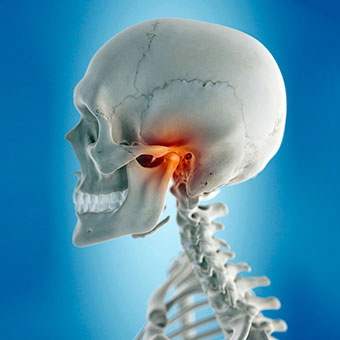
TMD is Temporomandibular Joint Disorder. This joint is the hinge that connects your jaw to the temporal bones of your skull, located in front of each ear. It’s this joint that allows you to open and close your mouth, chew, yawn, and yell at your kids for yelling in the house. There’s so much about this disorder that is a bit of a mystery, but what is known is that the muscles and the bones cause issues that might have arisen due to an accident, grinding or clenching teeth, arthritis, stress, and even genetics. It is more common in females than males, and often presents around 14 or 15. I meet at least three of those potential causes: I had an ATV accident when I was 10, hitting a tree and stopping it with my face. My sister also has this disorder, so there’s a manifested genetic component, and I’ve often joked that I wear my stress in my face. I’ve ground my teeth since I started teething. It’s all led to a life of jaw pain, popping, clicking, and locking of the joint, muscle spasms in my face and neck, and a wearing down of my teeth.
Over the years, I’ve grown up, married, and had kids, and as time has gone, my teeth have shifted. See, I knew the orthodontist wanted me to have a “permanent” retainer forever, but it never dawned on me why. What I didn’t really comprehend was that teeth are always shifting. You may have had great teeth in your youth or as a young adult, but before you know it, you’re 40 and you notice that your teeth are crowding. I don’t think grinding my teeth helped matters. If I had to guess, I’d say that it made matters worse. It certainly affected my bite.
In recent years, I’ve used bite guards, wearing them at night when I sleep, and I’ve had and used two different TMJ splints. They provide relief while I sleep, but that is always quite temporary.
In November 2015 I went back to work after being a stay-at-home mom for years. I went to work for my kids’ orthodontist. My daughter was already out of her braces and into retainers, and my son was in braces at the time. I found Dr. Jim Maginnis through the recommendation of friends of mine through our “military wife” network, as we jokingly call it. While I do marketing for Dr. Maginnis, I also function as a part-time treatment coordinator.
You learn a lot about teeth and orthodontics while observing these consultations. Each patient is different and requires specialized treatment. One might have some mild crowding, and a year in braces will do the trick, while some have more complex issues requiring a longer amount of time in orthodontic treatment. Some have bite issues, like an overbite or under-bite, or like me, a cross-bite. Some are a combination of things. Regardless of the case, each one lends a little more knowledge to learning about this specialized field of dentistry. And what I learned was that I should do something a little more than a splint can provide.
I needed to straighten my teeth and adjust my bite. This realignment of teeth would help provide some relief, as well as restore a confident smile, but at 40 years old, I wanted to explore another option besides braces.
I consulted with Dr. Maginnis about my options, and he recommended Invisalign. Invisalign is a system of straightening teeth that involves wearing a set of clear, plastic aligners custom designed through digital scanning of the teeth to provide appropriate teeth movement. For optimal results, the patient must wear the aligners 20-22 hours per day, only removing them to eat and brush teeth.
This was a perfect alternative to braces for me. Now, it’s time to get started.

 Fresh Smiles in the Lowcountry